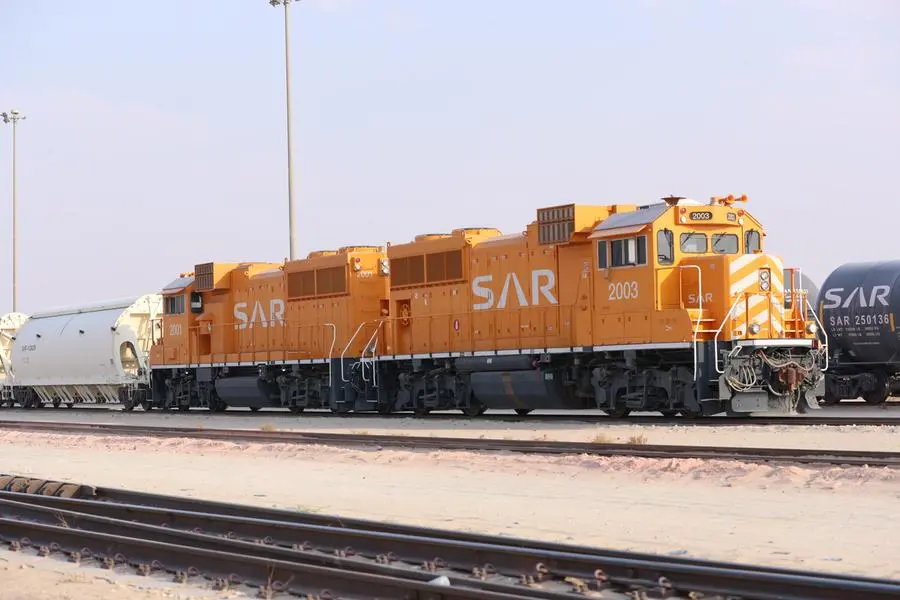
Rail Revolution: Saudi Railways Unveils Five New Strategic Logistics Corridors

- Rakesh Kumar Prajapati
RIYADH – In a landmark move for the Kingdom’s transport sector, Saudi Railways (SAR) has officially launched five new logistics routes, weaving together a high-capacity freight network designed to cement Saudi Arabia’s status as a global trade bridge.
The newly established corridors create a seamless “multimodal” artery, combining the heavy-lift capabilities of rail with the flexibility of road transport. This network establishes a direct link between the bustling ports of the Arabian Gulf and the Red Sea, cutting through the Kingdom’s central and northern heartlands and extending toward international borders.
Linking the Coasts
Central to this operation is the Riyadh Dry Port, which serves as the primary inland hub connecting various SAR freight yards. These yards—strategically located in Dammam, Jubail, Ras Al-Khair, Al-Kharj, Hail, and Qurayyat—now function as a unified system. By tethering these industrial zones to major maritime gateways, SAR has effectively shortened the distance between local production and global consumption.
Fueling Industrial Growth
The expansion is a major win for the Kingdom’s industrial titans. By optimizing the flow of exports and imports, the routes provide a massive boost to the petrochemical and mining industries, which rely on consistent, high-volume transport.
Dr. Bashar Al-Malik, CEO of Saudi Railways, described the initiative as a “comprehensive package of logistical solutions.” He noted that the integration of various transport modes is designed to maintain supply chain reliability regardless of external conditions.
“This development reinforces the Kingdom’s position as a pivotal trade corridor linking East and West,” Al-Malik stated, emphasizing that the routes are built to meet the rigorous demands of global shipping lines and major mining enterprises.
A Greener, Safer Horizon
Beyond the economic balance sheet, the shift from road to rail promises a significant “green” dividend for the Kingdom. SAR officials expect the new routes to:
Remove thousands of heavy trucks from the national highway system.
Significantly reduce carbon emissions, aligning with national sustainability goals.
Improve road safety for the general public by decreasing commercial traffic density.
As transit times shrink and operational efficiency climbs, SAR’s latest expansion marks a turning point in the National Transport and Logistics Strategy, transforming the desert landscape into a high-speed engine for international commerce.

45, 180 Claremont Ave, New York, 10027
PRESS@BUSINESSONGROUND.COM
+1 313 333 9313
© 2023 Nexa Report